
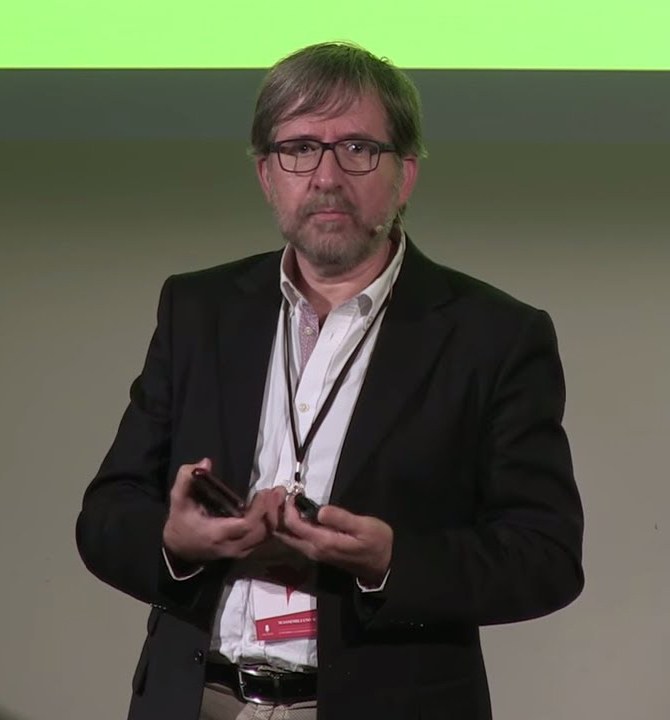
Mario Massimiliano SALFI
Keywords
Applications of Artificial Intelligence in Clinical Diagnostics. Assistive Technologies. Biomedical Engineering. Rare Eye Diseases. Applications of Virtual Reality in Rehabilitation.
In his professional activities, in addition to university teaching, he is an entrepreneur in the field of digital technologies applied to healthcare. His experience integrates scientific research, technological innovation, and academic teaching, with a particular focus on Artificial Intelligence, biomedical engineering, eHealth, telemedicine, and assistive technologies.
Since 2005, he has been an Adjunct Professor at the University of Catania, where he teaches courses related to computer science, electronic and biomedical engineering, biomedical signal processing, and digital applications in healthcare. He has taught in several Departments (Medicine, Engineering, Biological Sciences, Education Sciences) and serves as Subject Expert in “Pathologies of the Visual System” at the University of Enna Kore within the Degree Program in Medicine and Surgery. He has supervised over one hundred theses in the fields of Artificial Intelligence, telemedicine, virtual reality, and visual rehabilitation.
In 2012, he founded vEyes (virtual Eyes), now a Social Promotion Association officially registered in the Italian National Third Sector Register (RUNTS), where he serves as President and Scientific Director. The organization develops assistive technologies and innovative tools for prevention, diagnosis, and support for individuals with visual impairments and rare diseases. Among the projects he has conceived and coordinated are SABREEN, an intelligent assistant for breast ultrasound screening integrated with machine learning techniques and currently undergoing clinical validation; redEyes, an AI-based neonatal red reflex screening system; Tourist Eyes, a smart mobility platform for blind individuals; Poseidon 2.0, a tracking system for visually impaired swimmers; ViStA (Visual Stimulation Ambience), a virtual reality–based platform for visual rehabilitation in children with amblyopia; the wearable platform vEyes Wear; and ARIANNA, an integrated infrastructure combining a patient registry, diagnostic artificial intelligence, and telemedicine in the context of rare ocular diseases.
In 2019, he founded HTLab – Healthcare Technology Lab, an innovative startup owned by vEyes, specializing in the development of high-tech hardware/software solutions for eHealth. He is also Co-Founder and CEO of Etnasoftware srl, a company active in the development of management software solutions, hardware-software access control systems, and client-server and web platforms for time and attendance management. Previously, he served as Project Manager and software developer at Poste Italiane SpA, gaining significant experience in managing complex IT projects and human resources.
After beginning his academic path in electronic engineering, he graduated with honors in Computer Science from the University of Catania with a thesis in Artificial Intelligence on automatic music composition. He earned a Master’s degree in Artificial Intelligence and Digital Multimedia Production from New York University. His educational background also includes formal musical studies at the “Vincenzo Bellini” Conservatory in Catania. In the artistic field, he has produced several works as an author, composer, and arranger, including the original musical “Ma cosa vuoi che sia,” which premiered in 2005 under the production of MAST (Music, Art and Theatrical Performances).
Author of scientific publications and speaker at numerous national and international conferences, he combines advanced technological expertise with strong organizational and managerial skills, operating at the intersection of digital innovation, clinical research, and social impact.